West elevations, big glass
Solar Control Window Film for Raleigh Commercial Buildings
Commercial buildings in the Triangle carry a lot of glass, and on a July afternoon every square foot of the west side is a heater. Solar control film reduces that heat at the source, on the glass, and it is chosen to suit whatever glazing the building already has.
 Raleigh
Solar Control Film for RTP Lab and Office Buildings
Research Triangle Park's buildings range from long, low structures built decades ago to newer lab and office buildings with large insulated glass. Lab spaces carry their own challenges: tight temperature and humidity requirements, heavy equipment loads and HVAC systems designed for air changes rather than solar gain. When a sunny elevation adds heat on top of all that, the system struggles and the lab notices.
Solar control film reduces the solar heat entering those spaces, which helps the mechanical systems hold conditions on the sunny side. In older RTP buildings with single-pane tinted glass, a strong film often makes a big difference. In newer buildings with high-performance insulated units, the gains are smaller and the film choice more constrained, so we check the glass carefully before proposing anything. Labs also tend to run year-round with little downtime, so we work with lab managers on which rooms can be entered when and what protective steps the space needs during the install.
Thermal Stress and Glass Compatibility for Commercial Solar Film
Every piece of glass heats up in the sun. Film that absorbs a lot of energy raises the glass temperature further, and where the center of the pane gets hot while the edges stay cool inside the frame, stress builds. Large insulated units, tinted glass and glass partly shaded by columns or overhangs are the most sensitive.
Film manufacturers publish compatibility guidance that matches films to glass types and sizes. We identify the glass makeup, often by reading the spacer markings or checking the building's original submittals, and choose only films the manufacturer lists for that glass. When a building engineer wants it, we provide that documentation for the file.
- Glass identification before any recommendation
- Films checked against the maker's compatibility guidance
- Documentation for building engineers and owners
- Interior and exterior film options where suitable
Solar Control Window Film for Downtown Raleigh and Brier Creek
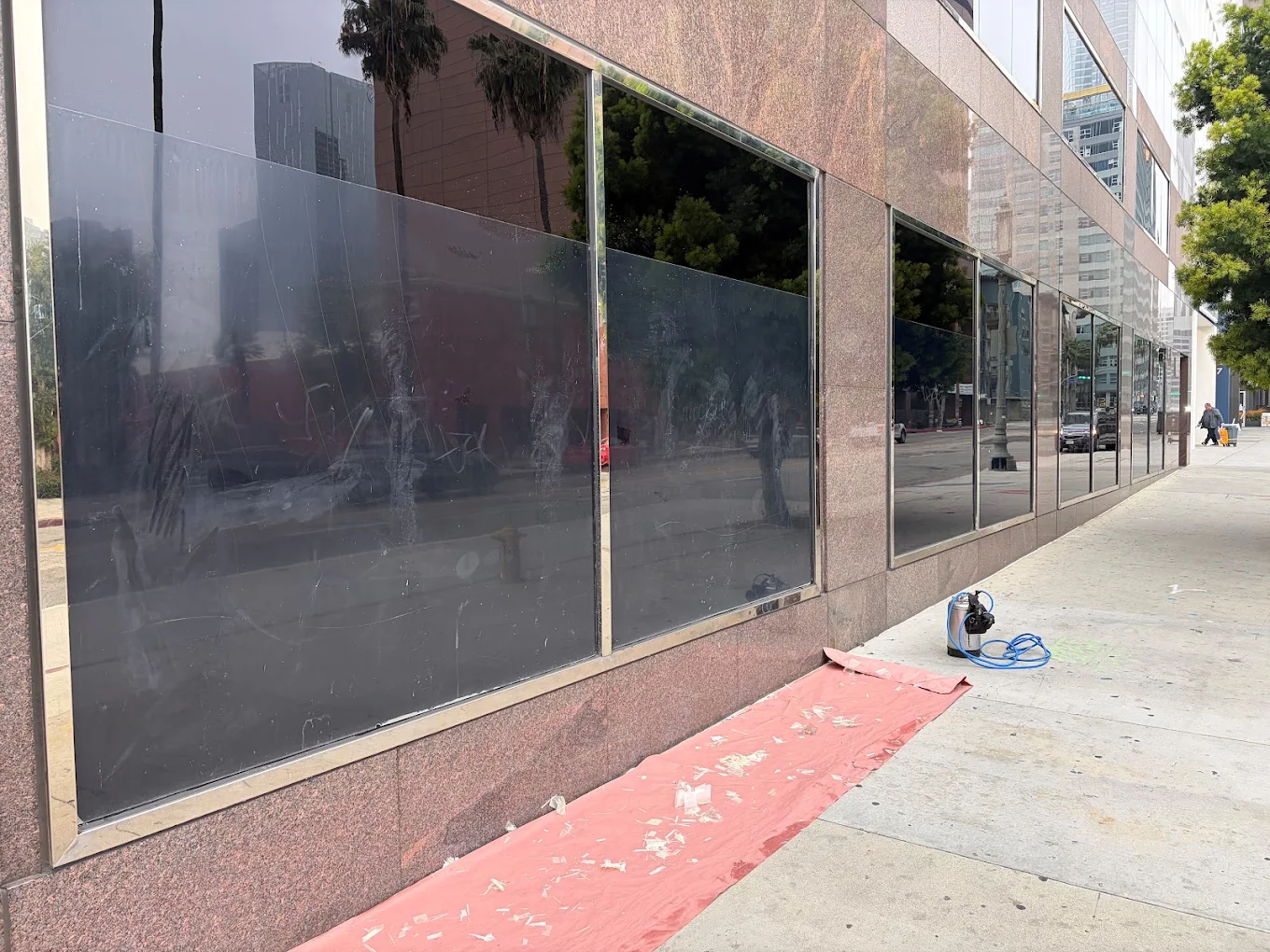
Downtown Raleigh's towers and mid-rises face each other across narrow streets, so lower floors are partly shaded while upper floors take full sun. Solar film plans there often vary by floor and elevation, with stronger film where the sun is unobstructed. Uniform appearance from the street is usually a landlord requirement, and we choose products that look consistent even where performance varies.
Out at Brier Creek, near the airport and I-540, the retail centers and office buildings sit in large parking fields with little shade. Storefronts and office glass facing west or south get sun nearly all afternoon, plus heat reflected off the pavement. Light solar films keep storefronts inviting while cutting heat, and office buildings can take stronger products where the landlord allows.
Interior or Exterior Solar Control Film
Interior mounting is the default for commercial solar film, since rain, pollen and window-washing rigs never touch it there. Exterior film is useful in specific cases, such as insulated units where interior film would add too much heat to the glass, or where access from inside is impractical. Exterior film wears faster and needs replacement sooner.
On large projects we sometimes recommend a mockup: a few panes on a typical elevation filmed first, so the owner and building engineer can see the look from outside and the effect inside before committing to the full building. A mockup also gives tenants a chance to weigh in, which smooths the rollout when the rest of the floors and wings are scheduled.
Solar Control Film Benefits for Triangle Buildings
Lower Solar Heat on Sunny Elevations
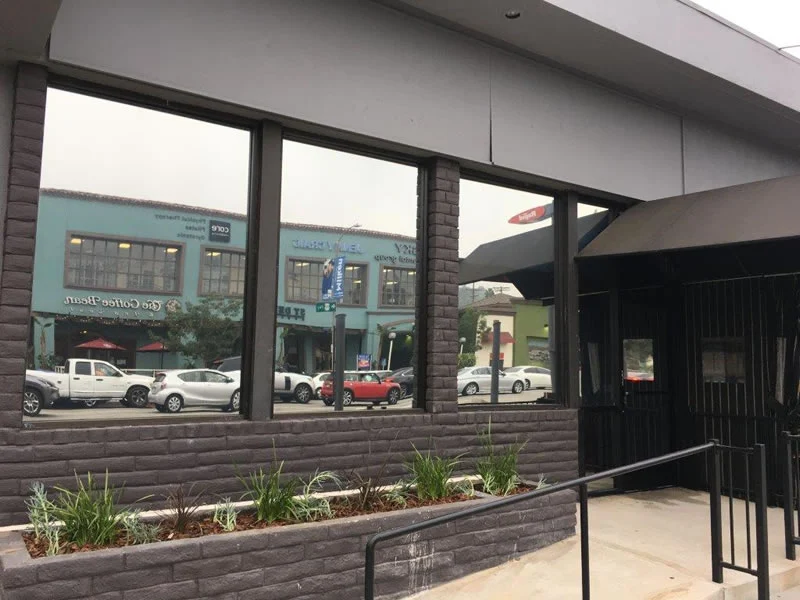
Film reduces the heat entering through west and south glass, helping perimeter zones and labs hold temperature on summer afternoons without overcooling the rest of the building.
Glare Control for Commercial Glass
Solar films also reduce visible glare, so occupants can use the space near the windows without closing blinds and losing the daylight the building was designed to admit.
Solar Film Matched to Existing Glass
Each film is selected for the building's actual glazing using the manufacturer's compatibility guidance, which protects the glass and the warranty on both products.
Consistent Solar Film Appearance From the Street
Film choices are coordinated so the facade looks uniform from the street, even when stronger products go on the sunniest floors or elevations.
Commercial Solar Film FAQs in the Raleigh Area
Can solar film be installed on a curtain wall?
Yes, usually from the inside. The key step is confirming that the film is approved for the curtain-wall glass to avoid thermal stress.
Does solar film help lab buildings hold temperature?
It reduces solar heat gain on sunny elevations, which takes some load off the HVAC system. It does not change equipment or ventilation loads.
What is a mockup and do we need one?
A mockup is a small area filmed first so the owner can see the result. It is useful on large or visible projects and on buildings with strict appearance standards.
How long does commercial solar film last?
Interior film typically lasts many years, with terms set by the manufacturer's commercial warranty. Exterior films wear faster because they face the weather.
Window film quote
Solar Control Film Proposal for Your Raleigh Area Building
Through the quote form, send the building address, elevations that run hot and any glazing details or drawings. We will reply with a film recommendation and a scope.
Prefer email? info@windowfilmraleigh.pro