
Smaller summer bills, same daylight
Energy-Saving Window Film in Raleigh
In a Triangle house, summer cooling is where most of the electric bill goes, and sun through the windows is one of the biggest pieces of that load. Energy-saving film targets the glass that lets the most heat in.
 Raleigh
Where Window Energy Goes in a Raleigh House
A house in central North Carolina gains heat through its roof, walls, air leaks and windows. Of those, windows are the one place where the sun shines directly in. On a west wall in July, a large window can pour heat into a room for hours, and the air conditioner has to remove it along with the humidity it is already fighting.
Winter is milder here than in the Northeast, but cold nights still happen, and older single-pane or early double-pane glass loses heat steadily. Energy-saving film comes in two main kinds: solar control films that cut summer heat gain, and low-E films that also reflect some indoor heat back into the room in winter. Which one fits depends on the house and its glass.
Energy-Saving Film for Duke Energy, Apex and Wake Forest Customers
Most homes in Raleigh, Cary, Durham and Chapel Hill buy power from Duke Energy. Apex and Wake Forest run their own municipal electric systems, so residents in those towns pay a town utility instead. The rate structures differ, but in every case summer afternoons are when cooling demand peaks and when window heat gain is highest.
Film reduces that afternoon load at the source. Nobody can honestly quote a bill reduction from a phone call. The answer hangs on insulation, ductwork, thermostat habits, the glass and how many windows the sun reaches. What we can show is the solar heat gain coefficient and light transmission for each film, which an energy auditor or HVAC contractor can use to estimate the effect for your home.
Energy-Saving Window Film for Cary and Apex Two-Story Homes
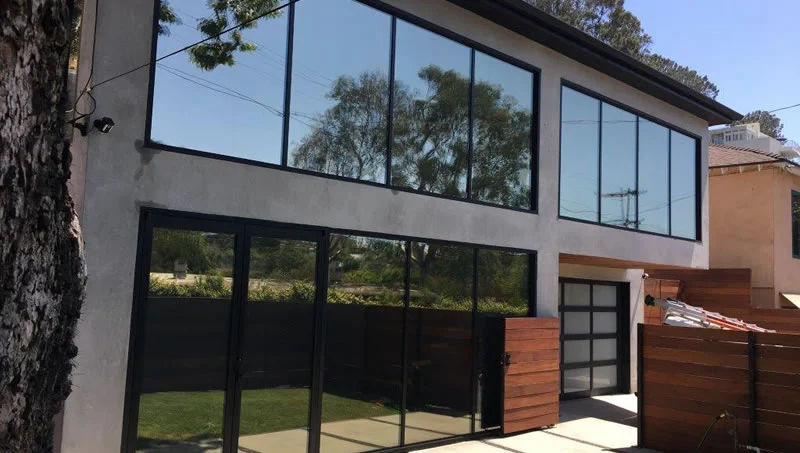
Two-story houses in Cary and Apex often run two HVAC systems, one for each floor. The upstairs unit works harder because heat rises, the attic sits above it and the bonus room glass faces whatever direction the lot happened to face. Filming the upstairs west and south glass is often the most effective way to ease that unit's load.
Builder windows in these homes usually already have a low-E coating, which helps. Film adds to that, but it has to be compatible with the existing coating and the insulated unit. We confirm the glass type and choose films the manufacturer has approved for it before installing.
- Solar control film for west and south summer glass
- Low-E film for older glass that also loses heat in winter
- Upstairs-first plans for two-system houses
- Performance data for energy auditors and HVAC contractors
Energy-Saving Film Versus Replacing Windows
Replacement windows improve insulation and air sealing as well as solar control, and in a house with failing frames they may be the right answer. They also cost far more and take longer. Film addresses solar heat gain, the main summer problem, for a fraction of the price and installs in a day without disturbing trim or siding.
For many Triangle homes, the practical approach is film on the sunniest glass now and replacement windows later if the frames themselves fail. Film can be removed before replacement, so it does not lock you into anything. If the replacement is years off, the film simply keeps working until then. In the meantime it protects floors and furniture from UV, which new windows would also need to do.
Energy Film Benefits for Triangle Homeowners
Lower Summer Cooling Load From Glass
Film cuts the solar heat that comes through sunny windows, which leaves the compressor less to fight from Memorial Day into September.
Low-E Window Film for Winter Nights
On older glass, a low-E layer bounces part of the room's warmth back indoors, so a January night costs the heat pump a little less effort.
Window Film for Upstairs Rooms Near Setpoint
Filming upstairs west and south glass helps a second-floor system keep up, so bedrooms and bonus rooms stay nearer the thermostat setting in the evening.
Energy Window Film Without Construction
Film goes on in a day from inside the house, with no trim removal or siding work. It is a low-disruption upgrade compared with replacing windows.
Raleigh Energy Film Questions and Straight Answers
Will you guarantee a lower Duke Energy bill?
No, and be wary of anyone who does. Results vary with the house, the glass, the number of sunny windows and your thermostat. We provide film performance data so an auditor can estimate the effect, rather than quoting a number we cannot stand behind.
Is there any payoff in December?
From low-E film, some: it slows heat escaping through the glass overnight. Standard solar control films have less effect in winter, which is why south windows often get a lighter product.
Can I put energy film on new low-E windows?
Frequently, as long as the film maker lists it as compatible with that coating and that insulated unit. Reading the spacer label or the builder paperwork tells us which glass you have.
Do Duke Energy or town utilities offer rebates for window film?
Utility programs change over time. Check your utility's current residential efficiency offerings directly, and we can supply product documentation if a program requires it.
Window film quote
Energy-Saving Film Pricing for Your Raleigh Area Home
Through the quote form, tell us which rooms run hot or cold, which way their windows face and whether the glass is single or double pane. We will recommend a film for each area.
Prefer email? info@windowfilmraleigh.pro